Knowledge Operationalization from iNformal To EXecutable Models
An interactive workshop bridging the gap between informal domain knowledge and structured, operational conceptual models in model-driven engineering
An interactive workshop bridging the gap between informal domain knowledge and structured, operational conceptual models in model-driven engineering
Despite decades of research in model-driven engineering, a persistent challenge remains: how to systematically capture informal domain knowledge and structure it into conceptual models that can be effectively operationalized.
In practice, crucial knowledge about systems often exists in informal forms—natural language requirements, user stories, expert narratives, sketches, spreadsheets, and tacit understanding held by stakeholders.
Without a comprehensive modelling vision that integrates conceptual and technical models, this fragmentation hinders harmonization, limits information fusion, and undermines the consistency and operational value of models.
Methods, languages, and tools for transforming informal, unstructured and semi-formal knowledge into structured conceptual models, and operationalizing these within model-driven engineering ecosystems.
Researchers and practitioners working on extraction, structuration, and operationalization of knowledge from informal artifacts
Manual, semi-automatic, and fully automatic approaches to conceptual model derivation and transformation
Shared evaluation frameworks, benchmarks, and best practices for assessing model quality and operational readiness
Coherent, evolvable, and trustworthy model-driven systems through systematic knowledge capture and connection to operational models
Model-driven engineering, requirements engineering, knowledge representation, and AI/NLP-assisted modelling
Domain engineers facing day-to-day challenges of formalizing informal knowledge in industrial contexts
Developers of platforms, frameworks, or AI-assisted environments for conceptual modelling
Interested in how modelling skills evolve with increasing automation and AI support
Submit your abstracts, research papers, experience reports, vision papers, or tool demonstrations. Deadline extended to July 10, 2026.
Authors notified of acceptance decisions
Final papers due for publication proceedings
Workshop held during MODELS 2026 conference
Note: page limits include references.
All submitted papers must adhere to the ACM Conference format.
For LaTeX users: Use the provided acmart.cls and ACM-Reference-Format.bst without modification. Enable the conference format in the preamble of your document:
\documentclass[sigconf,review]{acmart}
Use the ACM reference format for the bibliography:
\bibliographystyle{ACM-Reference-Format}
The review option adds line numbers, to reference specific lines for comments.
Submit your paper via EasyChair
Review Process: Each submission will be evaluated by a minimum of three program committee members to ensure comprehensive and rigorous assessment.
Questions? Contact the organizers at david.manrique@list.lu
Starting January 1, 2026, ACM has fully transitioned to Open Access. All ACM publications, including those from ACM-sponsored conferences, will be 100% Open Access. Authors have two primary options for publishing Open Access articles with ACM: the ACM Open institutional model or by paying Article Processing Charges (APCs). To find out whether an APC applies to your article, please consult the list of participating institutions in ACM Open.
Understanding that this change could present financial challenges, ACM has approved a temporary subsidy of 65% for 2026. The subsidy offers:
Note for this workshop: Extended abstracts will be covered by a specific agreement with MODELS and will be published open-access free of charge.
Still No Silver Bullet: Models, AI and the Missing Dimensions of Complex Software Systems
Francis Bordeleau
How can domain knowledge become accessible and operational models?
Informalisms for Accessible Domain-Specific Modeling Language Engineering
Anish Bhobe, Dominique Blouin, Raj Shah, Clark Verbrugge, and Hans Vangheluwe
A Model-Driven Pipeline for Data Quality Specification and Operationalization: A No-Code Approach for Domain Experts
Arno Kesper, Lukas Sebastian Hofmann, Markus Matoni, and Gabriele Taentzer
How can we turn informal specifications into reliable and governed models?
From Natural Language to Formal Specifications: A Metamodel-Driven LLM Pipeline
Sally Ismail and Patrick Tessier
From Generation to Governance: A Conceptual Framework for Specification-Driven Development with Large Language Models
Malvina Latifaj
Open challenges and emerging directions in conceptual modelling
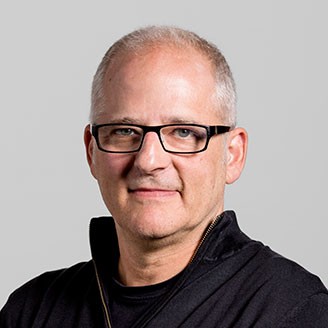
Professor, École de technologie supérieure
Forty years ago, Fred Brooks argued that the hard part of building software is “the specification, design, and testing of this conceptual construct, not the labor of representing it and testing the fidelity of the representation.” Since then, we have made spectacular progress in the labor of representation: high-level languages, model-driven engineering, cloud platforms, CI/CD pipelines, and, most recently, generative AI able to produce large parts of an implementation from a textual description. Yet the essential complexity Brooks identified has barely moved. Going from informal knowledge about what a system is for, whom it serves, and the context in which it operates to a conceptual model formal enough to be analyzed, executed, and evolved remains a dominant source of cost, defects, and failed projects.
Part of the reason, this talk argues, is that conceptual models systematically leave out the dimensions of the world that are hardest to formalize. Complex software systems operate within, and must account for, up to four dimensions: engineered systems, natural and biological processes, individual humans, and social structures such as teams, organizations, and institutions. Modelling practices, notations, and tools are mature for the first dimension, adequate for the second, and largely silent on the last two, even though this is often where the purpose of the system lies. A conceptual model with high fidelity in one dimension and none in another does not simply capture less; it can produce systems that are confident, actionable, and wrong.
Digital twins make this gap particularly visible, because their purpose is to represent a system. They will therefore serve as a running example throughout the talk: the smart building that exists for its occupants but is twinned primarily as plant equipment, or the software delivery process dominated by coordination but twinned as pipeline telemetry. Drawing on more than three decades of industrial and academic experience in software engineering, modelling and model-based engineering, DevOps, and digital twins, the talk will argue that dimensional scoping is a requirements and conceptual-modelling activity rather than a data or implementation activity. Fidelity, validation, drift, and decision authority must be defined for each dimension.
The talk will then examine how generative AI reshapes this picture. Generative AI reduces accidental complexity faster than any previous technology and can help elicit and structure informal human and social knowledge. However, it also makes it easier than ever to produce confident answers about dimensions that have never been modelled. The talk concludes with open challenges and deliberately provocative claims about what the conceptual-modelling community should stop—and start—doing.
Francis Bordeleau is a professor at École de technologie supérieure in Montréal, where he has been based since 2018. Since 2021, he has led the Kaloom–TELUS ÉTS Industrial Research Chair in DevOps. His research focuses on improving industrial DevOps processes and engineering digital twins for different application domains, combining conventional and AI/ML technologies and approaches. He has more than 30 years of experience in software engineering, software process improvement, and model-based engineering, working with academic and industrial partners worldwide. Before joining ÉTS, he was Product Manager of Software Development at Ericsson, founder and CEO of Zeligsoft, and an assistant professor at Carleton University. He has also served on the organising and programme committees of numerous international conferences and workshops.
Luxembourg Institute of Science and Technology (LIST), Luxembourg
Luxembourg Institute of Science and Technology (LIST), Luxembourg
Luxembourg Institute of Science and Technology
University of Mannheim
CGI Luxembourg
Institut Polytechnique de Paris
TU Wien
IMT Atlantique
Eindhoven University of Technology
University of Antwerp
Gran Sasso Science Institute
University of Bari
University of Oslo
IT University Copenhagen
Johannes Kepler University Linz
University of Luxembourg
TU Wien
MetaCase
Vrije Universiteit
TNO